Safety at Deer Crossing
Here’s the question under every other question parents ask us: what happens if something goes wrong out here, in the wilderness, with no cell service?
That’s a fair question. Here are the answers.
In more than 40 years of running this camp, four campers have needed medical treatment beyond what we manage onsite. Three needed stitches after a slip, trip, or fall. One needed an ankle splint after doing a handstand to impress his friends. That’s the whole list.
That record is a result of sustained focus on safety training and staffing. Our staff-to-camper ratio moves a little from session to session, but we consistently exceed 1 staff member for every 2.5 campers. Last summer we averaged 1 to 1.8.
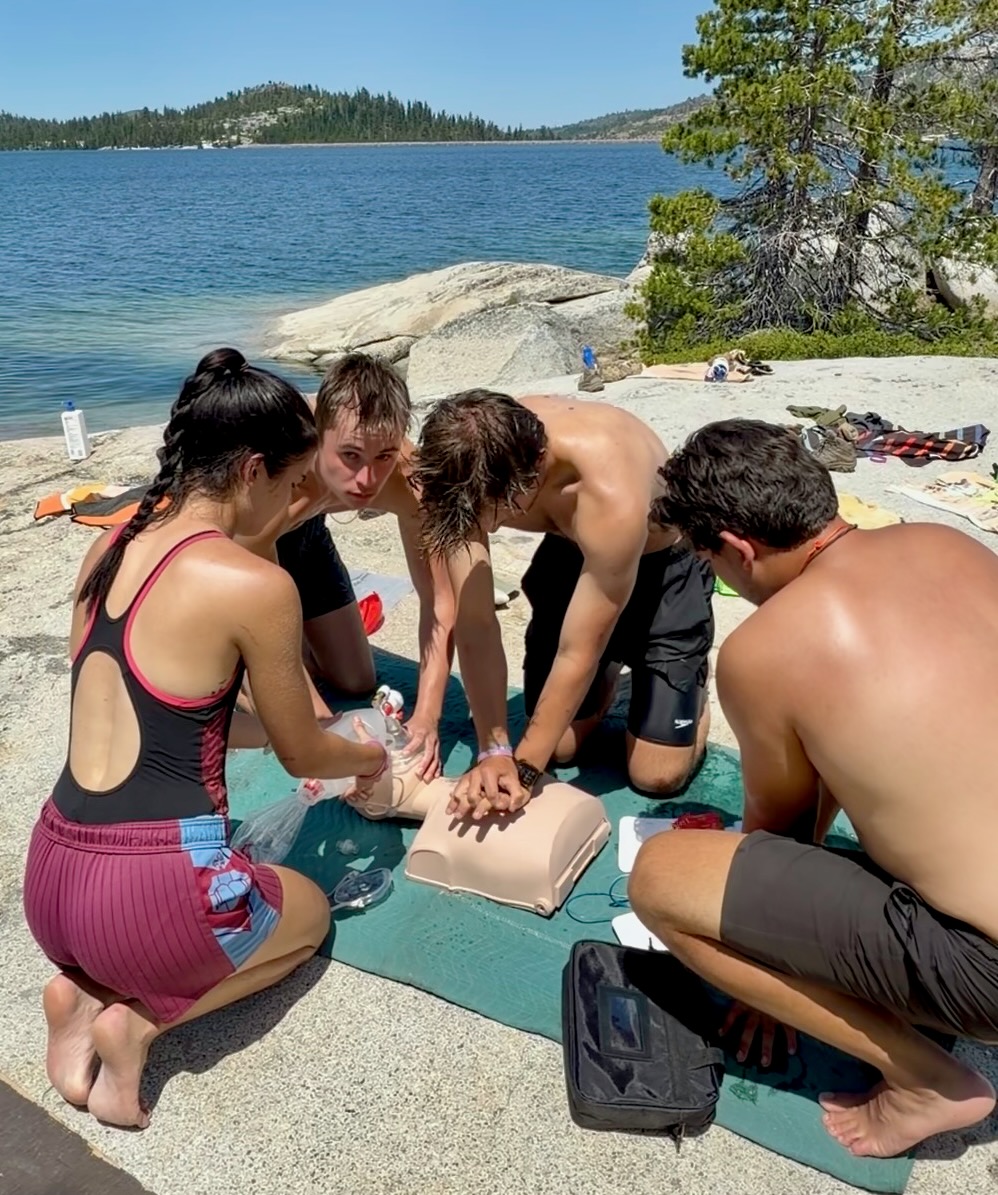
Every instructor is certified in Standard and Wilderness First Aid and Professional Rescuer CPR during our extensive staff training. This training is above American Camp Association accreditation standards. Beyond that, each year several arrive already certified as Wilderness First Responders or EMTs. Then we train and certify almost all of our instructors as American Red Cross Lifeguards, including advanced waterfront training. A lot of camps run their whole waterfront on just a few lifeguards; we don’t. On top of the certifications, every instructor runs through hands-on safety scenarios before the first camper shows up.
Campers get trained too – it builds our safety culture. (It also boosts their self-image as someone who can help take care of their community.) In their first session here, they learn artificial respiration, canoe rescues, and basic wilderness safety. The same safety focus gets built into archery, climbing, rafting, day hikes, campfire, water sports, whatever they’re doing that day. The safety procedures are part of the activity, not separate lectures bolted onto them.
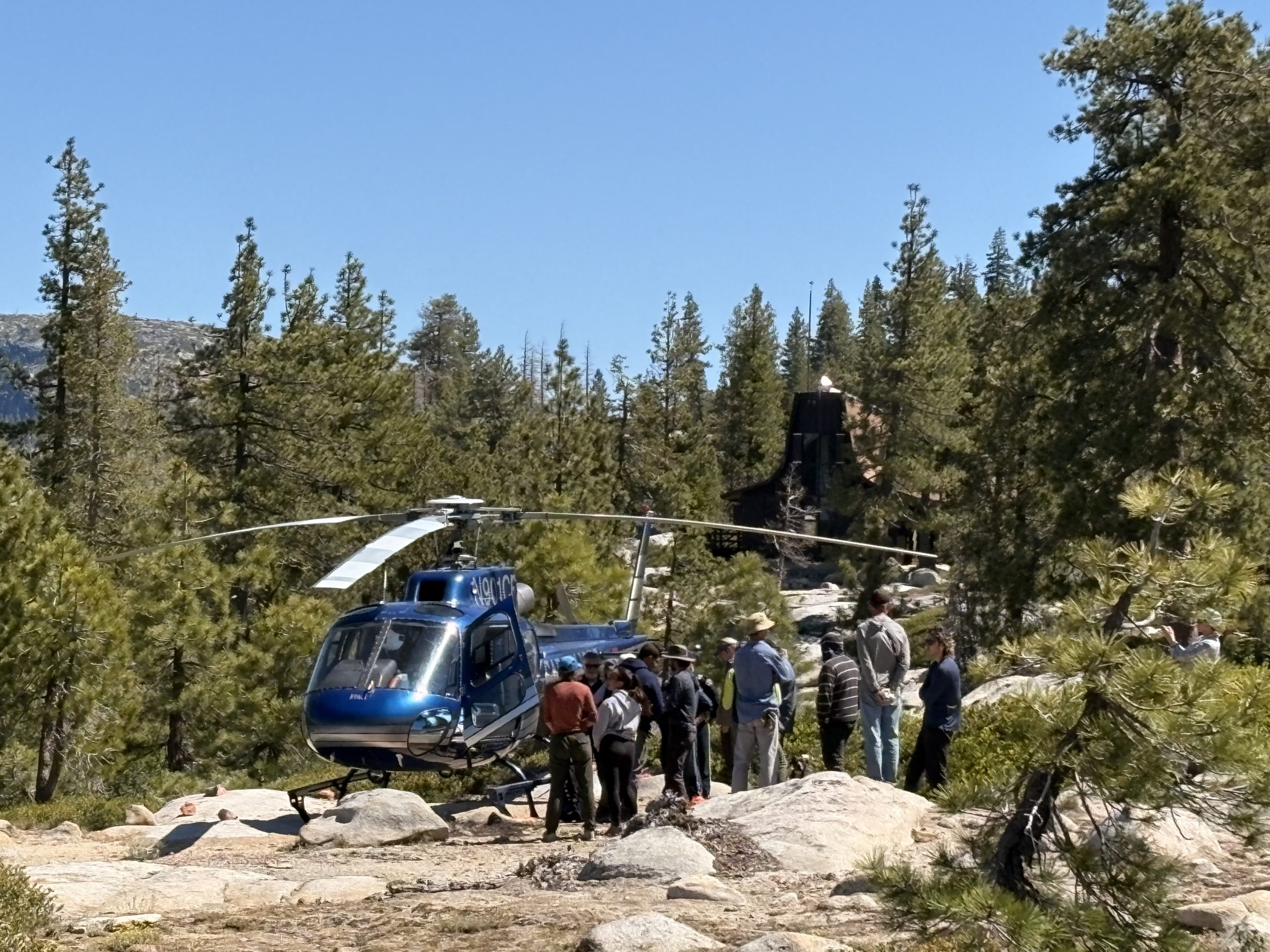
If something happens beyond first aid we can handle onsite, a hospital with ambulance service is only an hour away. There’s also a landing pad 200 yards from the lodge, where we train with rescue helicopters. We keep satellite phones and satellite internet running for exactly this reason. We maintain relationships with the US Forest Service, the El Dorado County Sheriff, Care Flight, the El Dorado County Health Department, CalFire, and the two nearest school bus operators, so if we ever need outside help fast, they know exactly who and where we are.
The other “is my kid okay” question we get a lot is around homesickness. We coach campers through missing home very openly, talking about the patterns we most often see and strategies they can use to feel better. Our most empathetic staff each year complete additional training on helping campers through this important developmental stage. If a camper appears to be having significant difficulty, we’ll be on the phone with you. We don’t sit on it if a camper is genuinely struggling, and we won’t keep a kid here who’s excessively homesick.
There’s no cell service at camp, so we know that’s its own worry. Call our office anytime and we’ll get a message to camp by satellite. Staff carry satellite communicators on trips away from the lake too, so that line stays open even when the group’s off in the backcountry.